

Four Months Vacant to Furnished and Market-Ready: How We Repositioned an Irving Condo
Sometimes the problem is not the property. It is how the property is being positioned.
A landlord in Irving contacted Furnished Housing Consultants (FHC) about a one-bedroom, one-bathroom condo that had been vacant for almost four months.
The owner was still paying the mortgage, HOA dues, taxes, and insurance. Lowering the rent again was an option—but we wanted to ask a different question:
Could the condo serve a different type of renter?
What Does Rental Property Repositioning Mean?
Rental property repositioning means changing how a property is furnished, presented, marketed, and targeted so it can appeal to a different segment of renters
Key Takeaways
- A prolonged vacancy does not always mean the property needs another rent reduction.
- Furnished housing can create a different rental positioning for certain properties.
- Location, renter demand, property characteristics, and operating economics should be evaluated before converting a rental.
- Furnishing does not always require a large upfront furniture purchase.
- In this Irving condo case study, the traditional rental positioning was approximately $1,350/month versus an estimated furnished positioning of approximately $2,200/month.
- FHC's qualifying property setup process can be completed in three days or less once the property is ready and accessible.
What Is Furnished Housing?
Furnished housing is a move-in-ready rental that includes furniture and the household essentials needed for a temporary or extended stay. Depending on the property and rental arrangement, it may also include utilities, internet, housewares, and other basic amenities.
We Started With the Property, Not the Furniture

Before recommending furnished housing, we visited the condo and studied the location.
The property was a first-floor condo in a quiet, gated Irving community with swimming pools. Restaurants, grocery stores, retail, and Irving Mall were also nearby.
Those details matter to someone staying for several months.
A relocating employee may want easy grocery shopping. A project worker may want a quiet place to come home to after work. A visiting professional may value convenient access to restaurants, highways, and everyday services.
So we looked beyond the four walls.
At FHC, we evaluate factors such as:
- Major employers and business districts
- Hospitals and medical centers
- Highways and transportation
- Grocery stores, restaurants, and shopping
- Recreation and entertainment
- Parking and neighborhood character
- The types of renters most likely to need housing in the area
The goal is simple:
understand who would want to live there and why.
The Vacancy Told Us Something Needed to Change
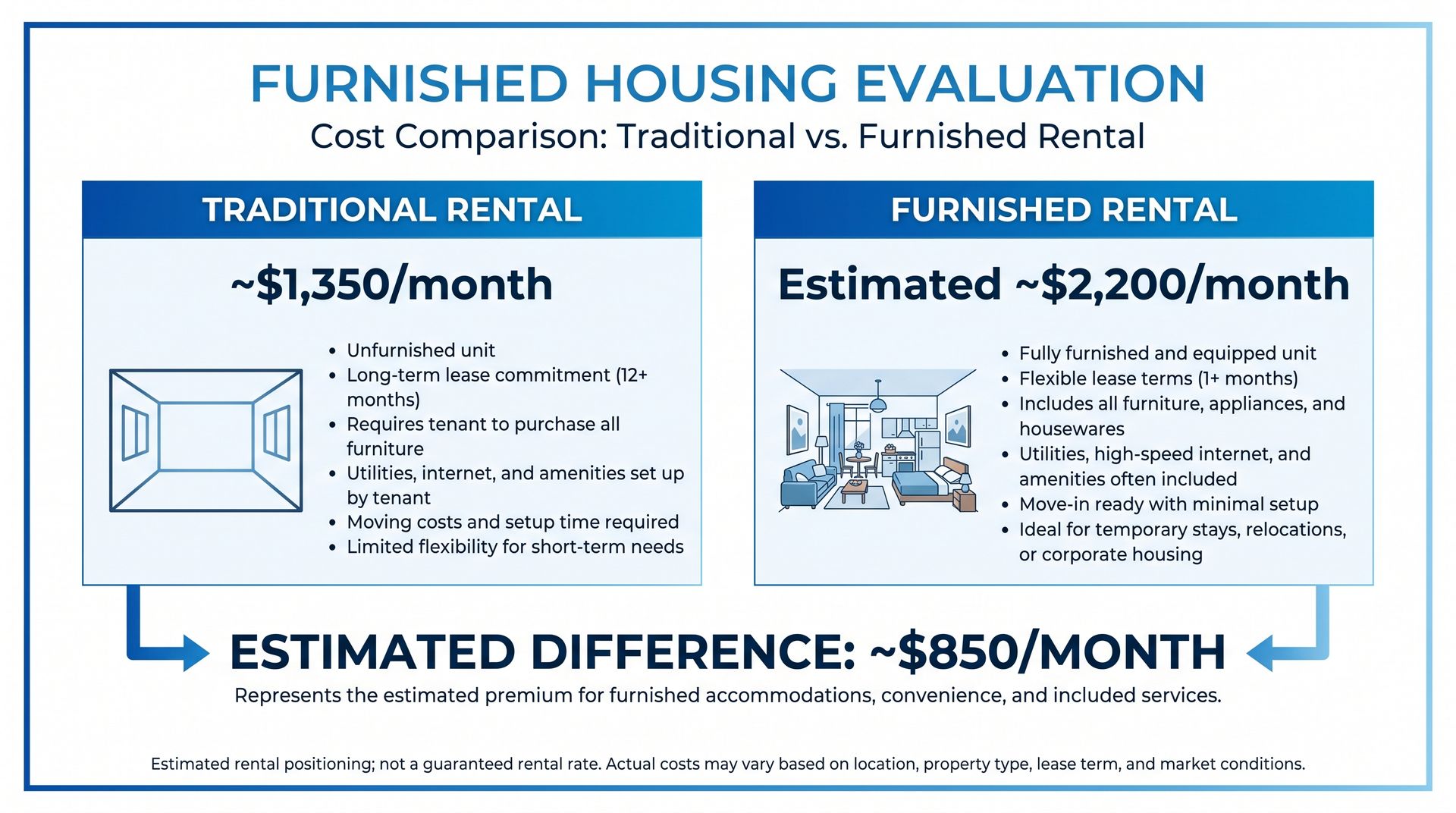
The condo had been competing as a traditional unfurnished one-bedroom rental at approximately $1,350 per month.
We evaluated whether it could instead be positioned as a professionally furnished, move-in-ready home at approximately $2,200 per month.
That represented a potential gross rent difference of about $850 per month before utilities, management, maintenance, turnover, vacancy, financing, and other operating costs.
The point was not that every vacant property can automatically earn more as furnished housing.
The point was that
a long vacancy may be a reason to reconsider the rental strategy, not simply lower the price.
The Biggest Obstacle: Furnishing Cost

The landlord's next concern was understandable:
“How much is it going to cost me to furnish this place?”
Instead of requiring the owner to purchase everything new upfront, FHC used its Preloved Furniture Program.
The program allowed us to select, coordinate, deliver, assemble, and stage quality furniture from existing inventory.
For this property, the setup included a low initial down payment and financing of less than $300 per month for 18 months.
That changed the conversation.
The owner could put the vacant property back to work without having to absorb the entire furnishing expense upfront.
We Furnished for Real Life—not Just for Photos
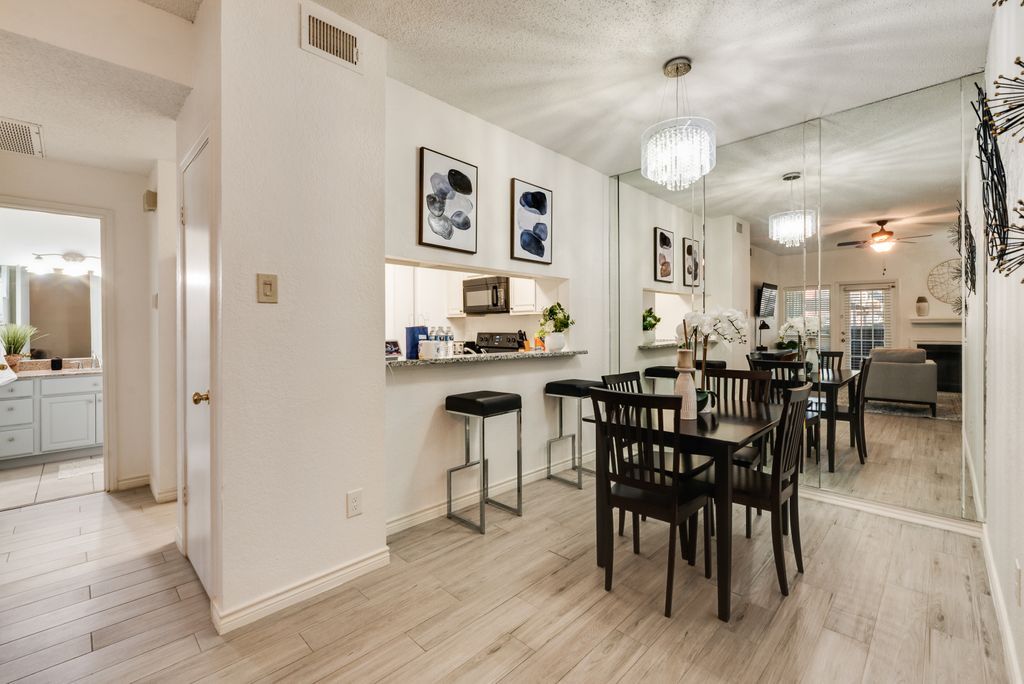
A furnished rental should feel like somewhere a person can actually live.
That means providing the basics a guest needs: a comfortable living room, a properly equipped bedroom, a functional kitchen, dining space, towels, housewares, and everyday essentials.
But we also avoid over-furnishing.
A one-bedroom condo can quickly feel cramped if too much furniture is added. We consider traffic flow, storage, natural light, door clearance, outlets, and how a guest will actually move through the home.
The goal is not to fill every corner.
The goal is to make every square foot useful.
We Changed the Question
Instead of asking:
“How do we rent this condo?”
we asked:
“Who would want to live here?”
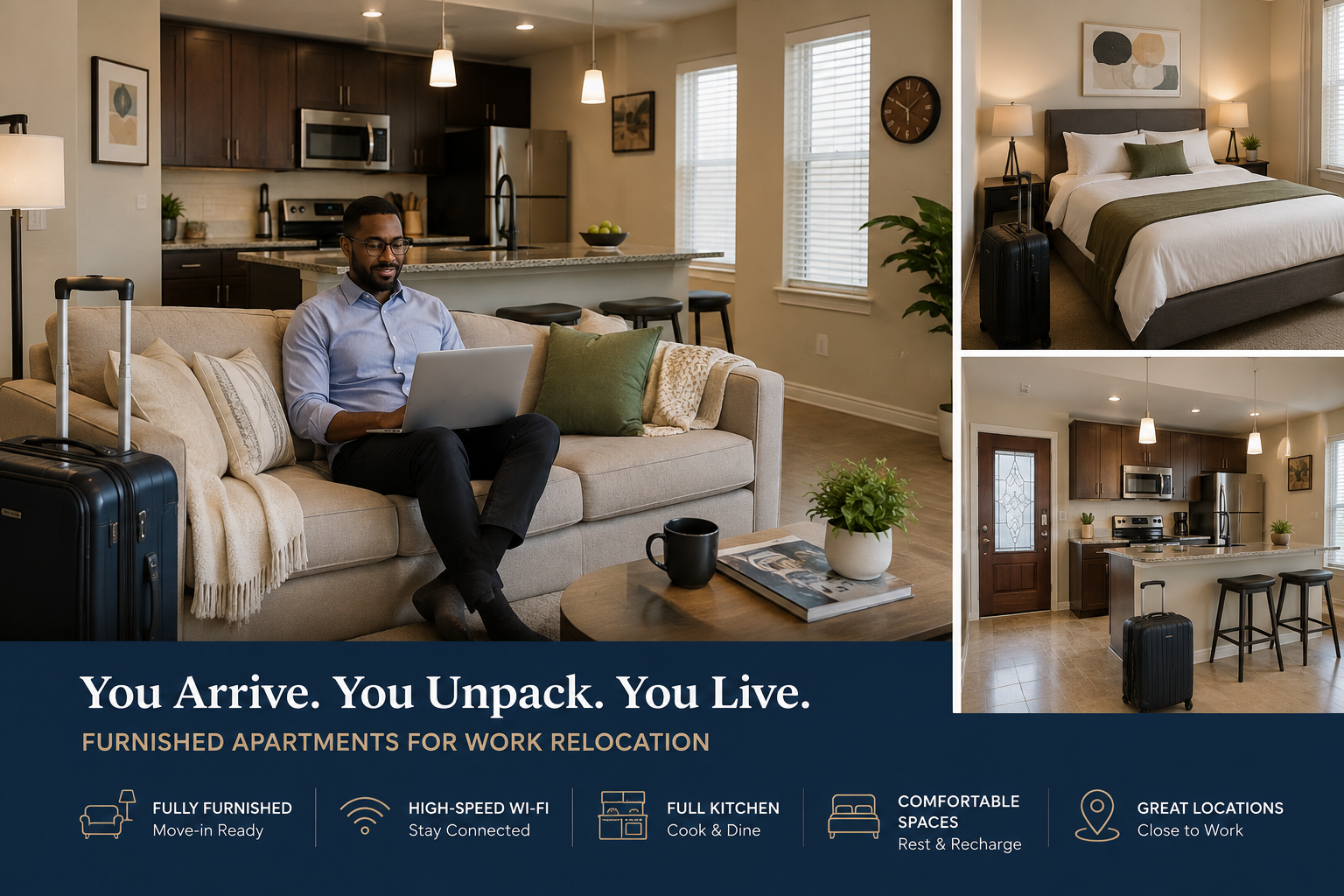
Imagine someone coming to Irving for a six-month project.
They arrive with luggage. They need groceries. They want internet, a comfortable bedroom, a kitchen, and a quiet place to relax after work. Their spouse or a friend may visit.
Suddenly, the property is more than a “1BR/1BA condo for rent.”
It becomes a furnished home where someone can arrive, unpack, and start living.
That is the difference repositioning can make.
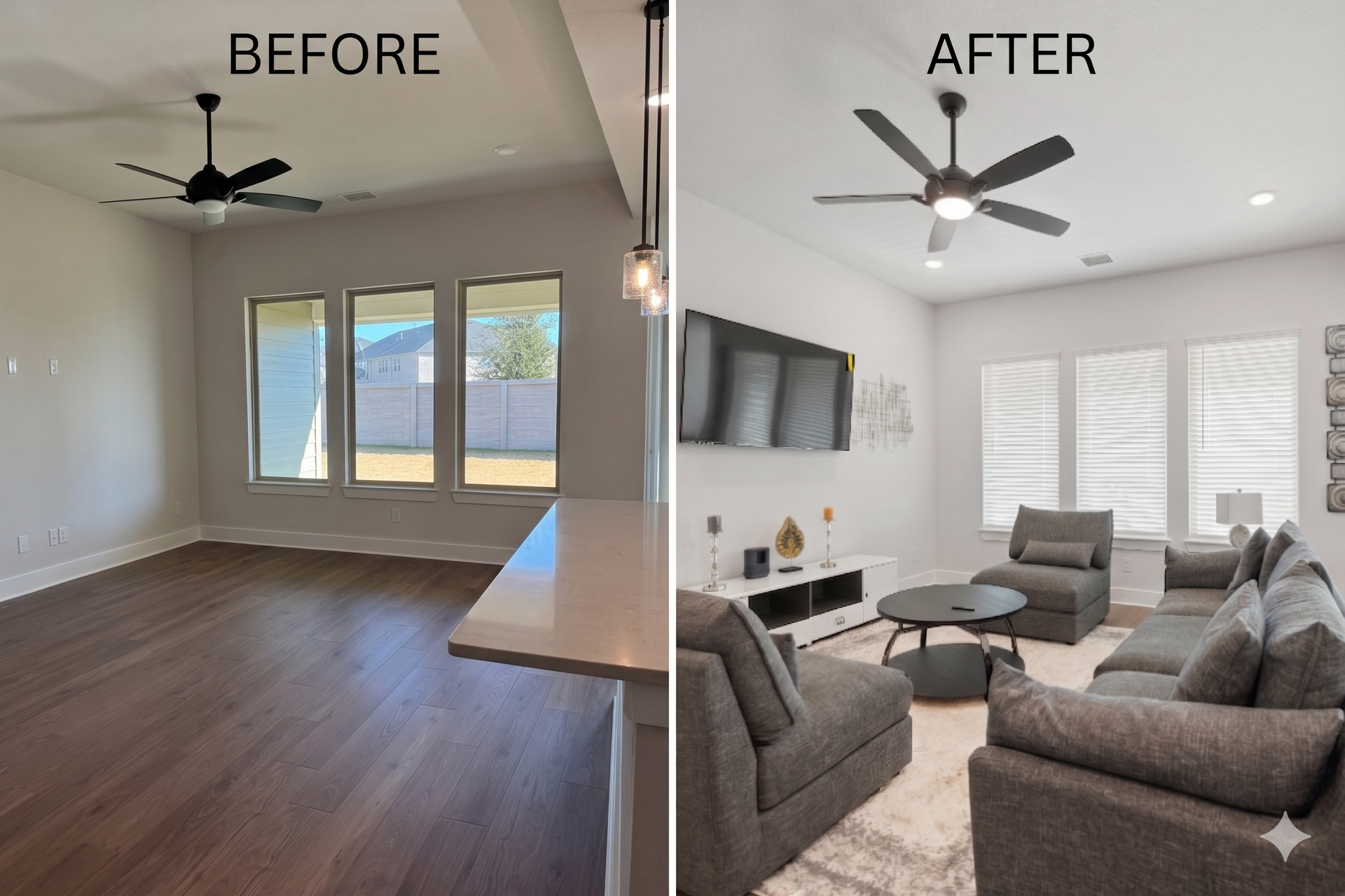
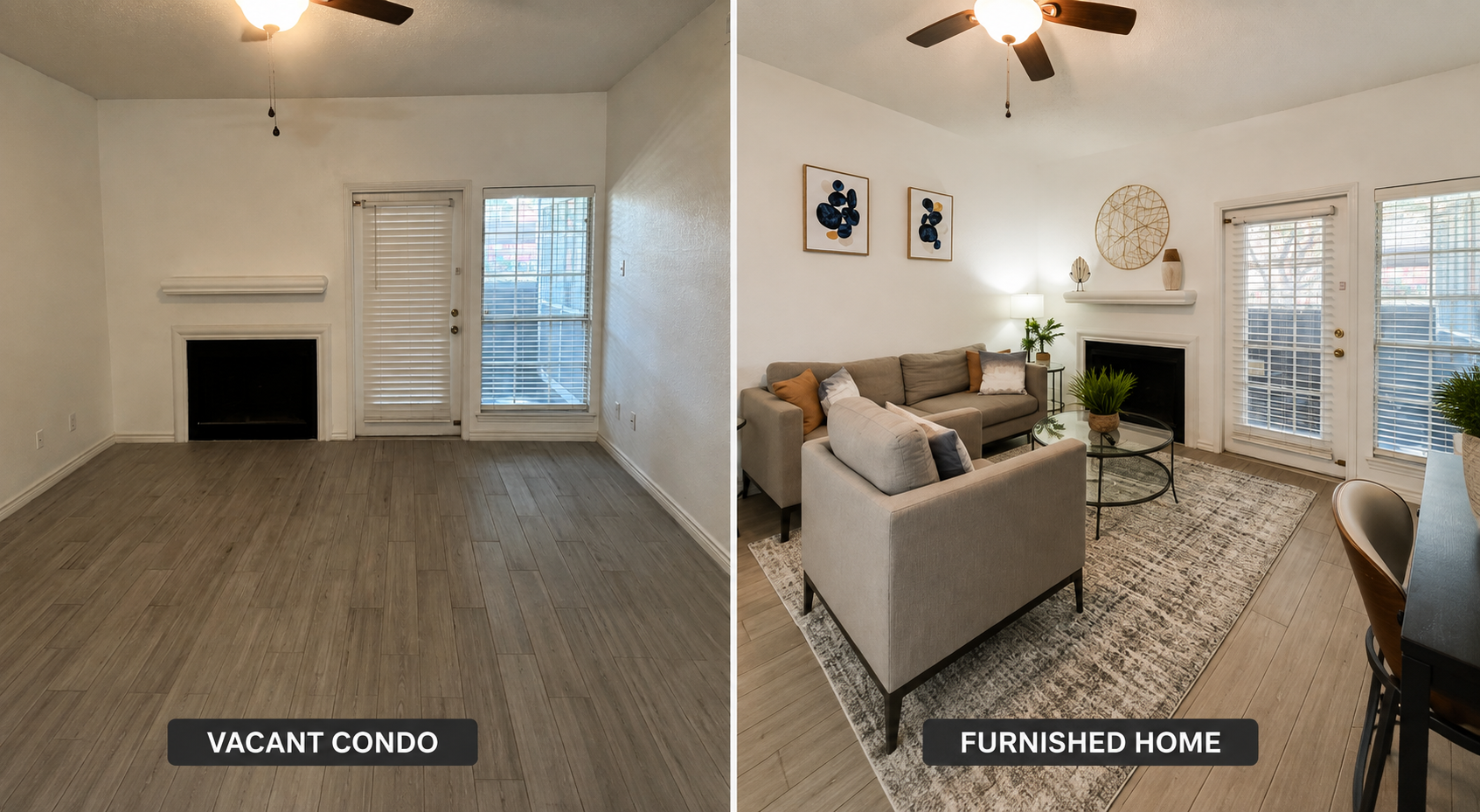
From Vacant Condo to Furnished Housing
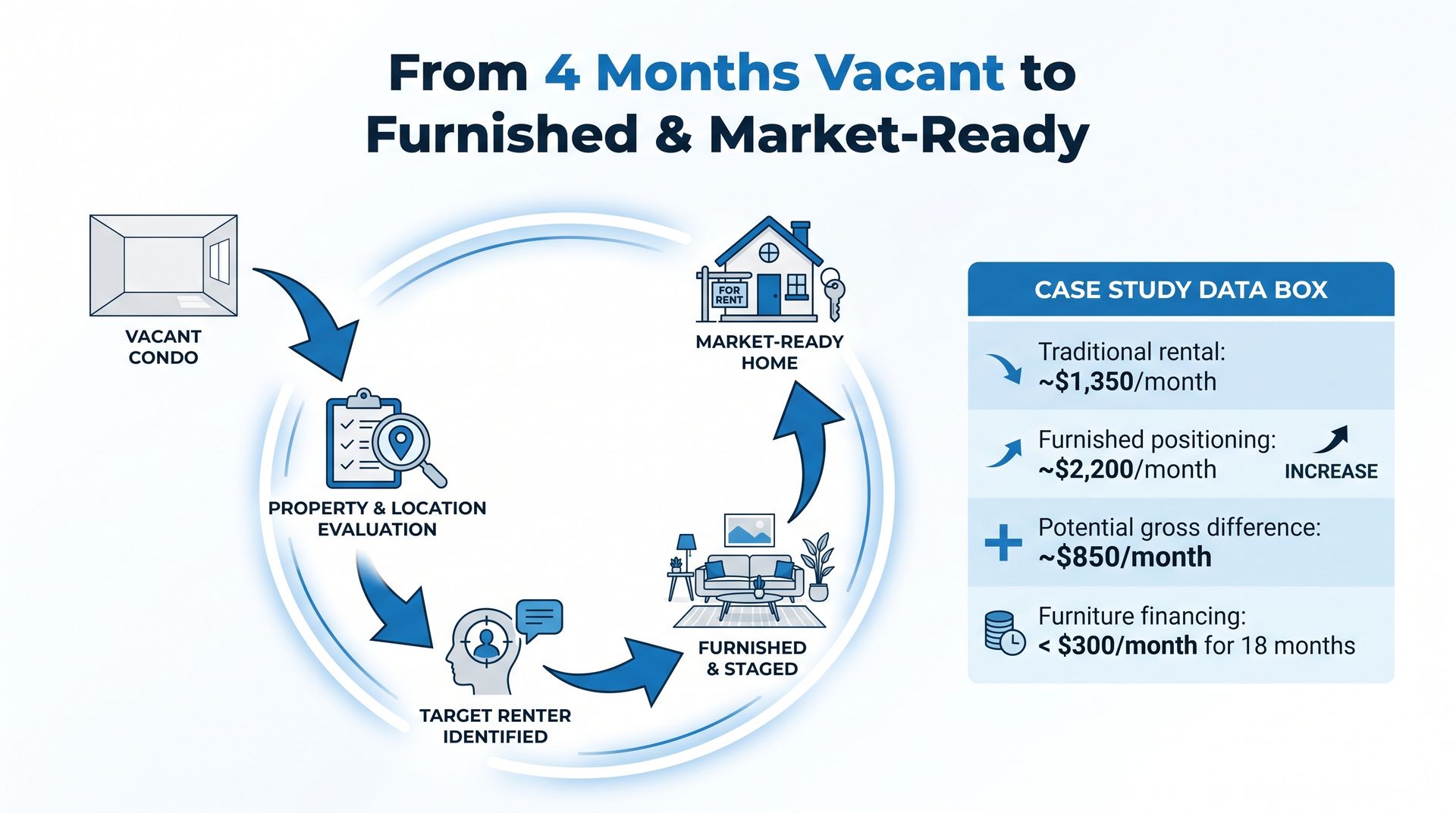
The transformation was not simply about buying furniture.
It involved putting several pieces together:
- A property that had been vacant for months
- A convenient Irving location
- A quiet gated community
- First-floor access
- Community amenities
- Nearby restaurants, groceries, and shopping
- A traditional rental value of about $1,350 per month
- A potential furnished positioning of about $2,200 per month
- A lower-cost furnishing solution through FHC's Preloved Furniture Program
For this owner, the opportunity was to stop asking
“Why isn't this condo renting?” and start asking
“Could we position it for a different renter?”
Could Your Vacant Property Work as Furnished Housing?

Not every property is a good candidate for furnished housing.
The location, property, demand, guest profile, furnishing requirements, and overall economics all need to make sense.
But if your condo, apartment, townhome, or house has been sitting vacant, it may be worth considering a different strategy before simply lowering the rent again.
At Furnished Housing Consultants, we evaluate the property and its surroundings, identify potential guest profiles, and determine what would be required to make the property furnished, staged, and market-ready.
Furniture is only part of the equation.
We study the property.
We study the location.
We understand the guest.
We consider the investment.
Then we build the furnished housing strategy around those four things.
At FHC, Location Influences the Entire Strategy
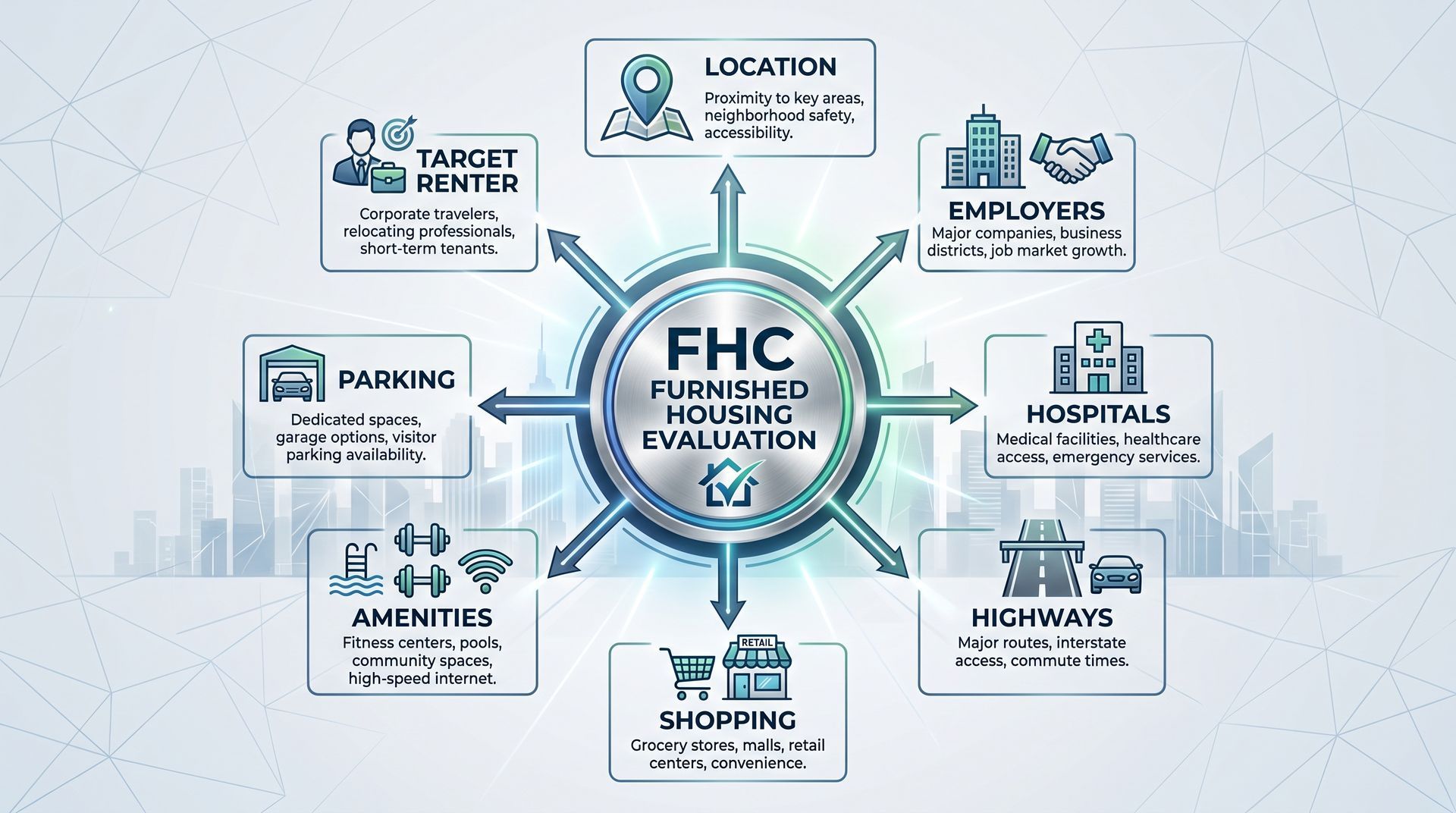
When a landlord asks us whether a property could work as furnished housing, we do not automatically say yes.
The property must have the location, physical characteristics, demand, and economics needed to support a furnished rental strategy.
Before recommending furnished housing, FHC evaluates several factors that can influence demand and profitability, including:
- Proximity to major employers
- Corporate offices and business districts
- Hospitals and medical centers
- Universities and schools
- Major highways
- Grocery stores
- Restaurants
- Shopping
- Fitness and recreation
- Entertainment
- Airports
- Neighborhood character
- Parking
- Safety and access
- The types of guests most likely to need housing in that area.
Why do these factors matter?
These factors help determine who is most likely to rent the property, how the property should be furnished, and how it should be positioned and marketed.
A condo near a major medical district may be ideal for a healthcare professional.
A home near corporate offices may appeal to relocating executives and project managers.
A property near an airport or major highway can be attractive to consultants and employees on extended assignments.
And a centrally located condo like this one in Irving can serve several different Target renter profiles.
The mistake would be marketing all of those properties the same way.